Two Identities
Clarifying climate math, from two giants

Math anchors The Work. Even in cases where the math is distorted, misrepresented, or misappropriated, the math is the math, and the sharp person can cut through nonsense with that math.
An identity is an equation that is universally true for all possible values of its variables. Two mathematical identities are particularly useful to The Work, developed by two giants in the field.


Yoichi Kaya (left) and John Holdren (right). Sources: Roger Pielke Jr (2024) and Wikipedia, respectively
Yoichi Kaya created RITE, the Research Institute of Innovative Technology of the Earth. This Japanese research center has delivered insights, breakthroughs, and value for over 35 years. Kaya was the founding director. Shockingly, he does not have his own Wikipedia page or any page, despite his impact and scholarship.
John Holdren was President Obama’s Chief Science Advisor and Director of the Office of Science and Technology. He’s currently at Harvard, where he holds the Teresa and John Heinz Research Professor of Environmental Policy. He has authored of over 200 scientific papers.
Drs. Kaya and Holdren are both alive. Each used math to simplify the complexities of climate change usefully. The Holdren identity (see below) is not his well-known I=PAT formulation (developed in 1970, link here) which is similar to the Kaya Identity. Rather, the Holdren Identity is my own representation of statements from his speeches and our conversations together.
The Kaya Identity (and expanded Kaya Identity)
The Kaya Identify (published in 1973) represents emissions as the product of multiple forces, sometimes competing forces.

The essence of the identity is two-fold: each term is straightforward, and that the numerator cancels the denominator, leaving CO2 emissions. David Hone (from Shell) has paraphrased the Identify for decision makers and lay audiences.

A quick take-away: it’s hard to get to zero! Unless ANY of the terms is zero, emissions are not zero. Few want population or GDP to go to zero (see below), so the simplest analysis is we need almost all of the energy to emit zero CO2, and efficiency helps – the last two terms in the equation.
Another quick take away: GDP growth per person is the biggest driver of emissions. It grows MUCH faster than population, and much faster than efficiency and clean energy can grow. Although that may change, it’s unlikely to be fast enough to avoid bad climate outcomes.
Although it’s a useful representation, many have pointed out the Kaya Identity misses important things. For example, it doesn’t include non-CO2 gases, feedbacks from natural systems, non-energy CO2 emissions (roughly 10% of global flux), etc. To anchor my points and focus on total emissions, I offer this expansion of the Kaya Identity:

One tension within the Identity: GDP growth commonly increases energy consumption. Although a few economies have decoupled emissions from growth (e.g., California, parts of Europe) most economies have not yet decoupled, including China, the US, and India. One could shut down steel mills and coal plants, but without immediate low-carbon swaps this would reduce GDP. Few decision makers will accept the loss of jobs, revenues, and trade.
GDP growth also adds non-CO2 emissions (e.g., methane from rice and meat production, nitrous oxides from farming) and non-energy emissions (e.g., by-product emissions from cement and steel manufacturing).
The math is again clarifying: to reduce emissions quickly, you can increase the CO2 sequestered, either CCS from point sources or as CO2 removal (from trees, oceans, DAC., etc.). It’s a big lever (one reason Kaya focused on CCS), and one used increasingly by governments, industry, decision makers, and academicians to balance the carbon books. Look no further than Denmark, which is using CCS from waste-to-energy and cement plants in addition to vehicle electrification, efficiency standards, and massive offshore wind deployment.
The Identity doesn’t include sensitivity to climate change, so it’s lacks obvious consequence. There is no time variable in the Identity, so it’s difficult to place it in time and conveys no urgency. The Identify doesn’t include money, so additional analysis is needed to understand trade-offs, cost-benefits, etc.
So it goes. The value of the Kaya Identity is in its simplicity, not its comprehensiveness. There are few levers to pull and if population and economic growth rise we need to pull all the levers – hard.
The Holdren Identity
As mentioned earlier, the Holdren Identity is my personal representation of something John says frequently - in his public work and private life. To paraphrase: There’s mitigation, adaptation, and suffering. That’s it. The more mitigation and adaptation we do, the less suffering there will be.
Written mathematically:

This equation sums to 100% - 1 in the formula. Whatever the other values are, there’s no wiggle room. That’s it. One can decide how to investment in mitigation or adaptation, but under-delivery of either means more suffering. To reduce suffering requires delivered mitigation and delivered adaptation.
I use delivered intentionally. Investment is not the same as delivery. Mitigation is delivered only when it actually cuts emissions (for example, preserving forests does not deliver mitigation, while shutting down steel mills does). Adaptation is delivered only when it works in practice—for example, when drought-resistant crops are purchased, planted, and grown, or when air conditioning is affordable, functional, and installed. Investors, especially governments, must prioritize delivery in their climate plans and commitments if they want to limit suffering.
Dual Identities
These two identities can be used to understand important climate trade space. Economic growth can stimulate adaptation delivery but can also grow emissions (both CO2 and non-CO2). Mitigation delivered can sometimes deliver economic growth and other times cannot. Building renewables does automatically reduce emissions - it must also deliver reductions by displacing generation or accelerating shutdown of emission.
U.S. data centers provide an illustrative case. The economic growth created by data centers buildout and operation grows both low-C energy and high emitting energy. The enormous purchase and build out of renewable power by the hyperscalers has not reduced emissions intensity (emissions/MWh) due to parallal natural gas increases. Mitigating those emissions (Holdren’s M) could be delivered by carbon capture and storage (expanded Kaya’s S), but not by buying more nuclear power in the future. Application of AI could accelerate mitigation and adaptation delivery, but only if delivered. More efficient chips (lower energy/GDP) could reduce one term (emissions), but only if the build out to drive GDP leads to less power consumption (other terms). If it leads to more consumption, there will be more GHG emissions., so greater impact.
One takeaway follows from the two identities, independently and jointly: coal emissions must be reduced profoundly and swiftly to hit key climate goals. Decoalification is very hard (see earlier Substacks here and here) – without decoalification, carbon sequestration becomes even more central to climate goal.
The identities behind the Identities
The title of this article is clearly a pun on the identities of the two featured individuals.
I don’t know Kaya well. I met him briefly in Kyoto, headquarters of RITE, at a 2002 conference on Greenhouse Gas Emissions Control. I learned much from the event, including deep reverence offered Dr. Kaya. By all accounts, he was and is eminently practical, focused on fielding solutions (chiefly renewables, efficiency, and sequestration) more than on abstract principles, timetables, and targets. He loves travel, both in his work and as a means of engaging global communities beyond his work – a testament to joy and human connection.
Dr. Holdren and I overlapped during the Obama Administration (2013-2016) and I have spoken with him many times since. He loves fly fishing, excellent wine for cheap, and all kinds of music. He’s fun, excellent, driven, compelling, and tireless. We’re lucky to have him.
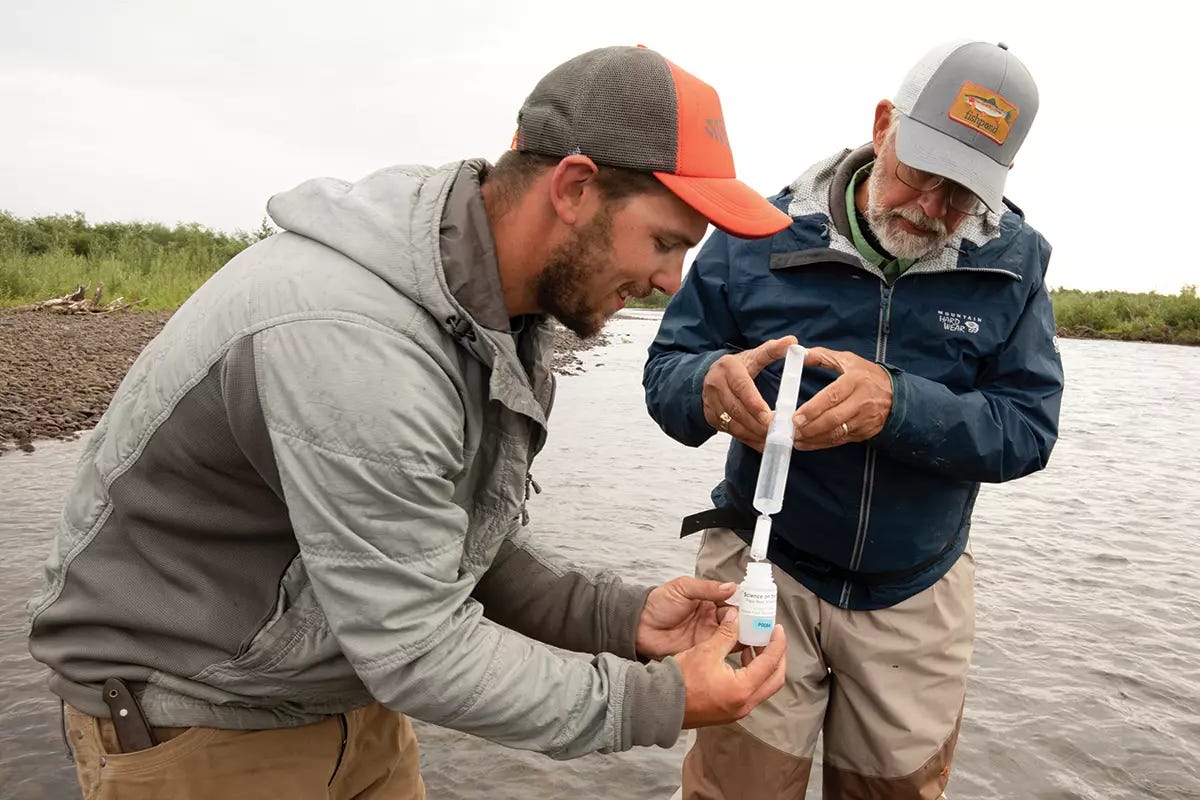
I have not asked John to review or comment on any aspect of this article. I look forward to him doing so and will report in a future piece once he does.
Thanks for this helpful look at bedrock principles defined by math. A problem emerges depending on the definition of adaptation in John’s formula (a great basic concept, which I’ve cited many times). If it’s strictly adaptation to dynamics set in motion by CO2-driven climate change that’s a problem because not all suffering from climate hazards is from co2-driven climate change. As you know, a big driver of losses in extreme coastal and weather events (still the dominant driver, as per LM Bouwer and others) is the “expanding bullseye” (Strader, Ashley) of vulnerable exposure in existing climate danger zones. Policy to reduce such harm is beneficial with or without climate change. Some context: https://revkin.substack.com/i/79692389/shifting-the-focus-to-climate-risk
Dr Friedmann, I’m grateful for another terrific essay - thank you!
Chris Jones, from the SWINE REPUBLIC on Substack, had a guest post from Wendy Johnson which contributed a great article on crop insurance - sharing it with you…
‘The Real Reason Farmers are not Adapting to Climate Change’
c/o The SWINE REPUBLIC | JUN 11 2026 | Substack
https://riverraccoon.substack.com/p/the-real-reason-farmers-arent-adapting?r=kxzps&utm_medium=ios
🇺🇸